
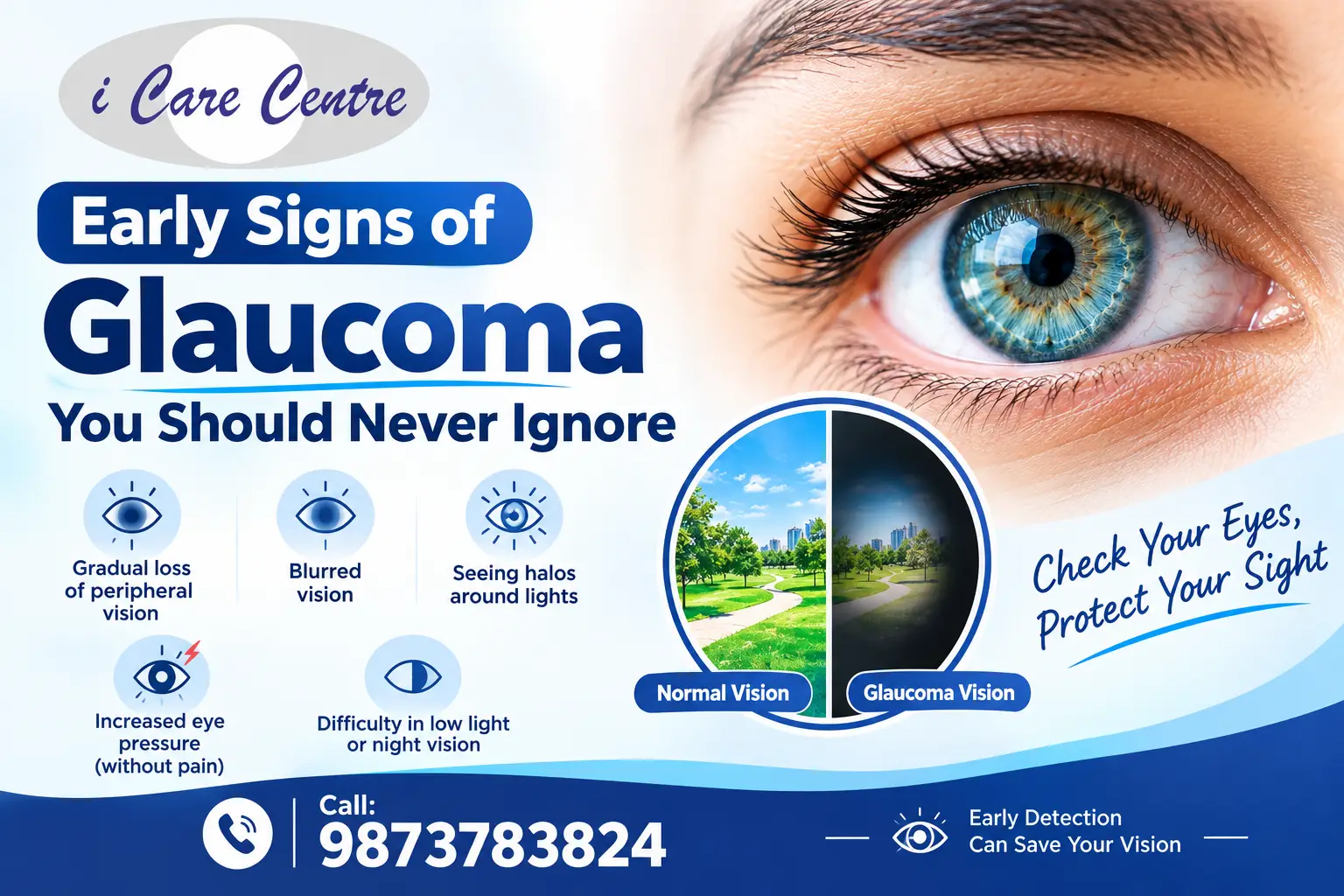
Glaucoma is one of the most serious eye conditions because it can gradually damage the optic nerve and affect vision. What makes glaucoma particularly concerning is that some forms can develop without noticeable glaucoma symptoms or clear signs of glaucoma during the early stages. By the time a person experiences significant changes in vision, permanent damage may already have occurred.
Understanding the early warning signs, risk factors, and importance of regular eye examinations can help protect your vision. If you notice unusual changes in your eyesight or have risk factors for glaucoma, an eye examination can help identify the condition at an earlier stage.
What Is Glaucoma?
Before discussing the warning signs, it is important to understand the glaucoma definition. Glaucoma is a group of eye diseases that can damage the optic nerve, which carries visual information from the eye to the brain. This damage is often associated with increased pressure inside the eye, although glaucoma can also occur when eye pressure is within the normal range.
In simple terms, the glaucoma meaning is a progressive eye condition that can cause irreversible vision loss if it is not detected and managed appropriately.
The optic nerve contains many delicate nerve fibres. When these fibres become damaged, a person may gradually lose parts of their field of vision. Glaucoma often starts by affecting peripheral vision, which means you may not notice a problem immediately.
Why Can Glaucoma Be Difficult to Detect?
One of the main challenges with glaucoma is that it may develop slowly. Many people do not experience pain, redness, or obvious vision changes in the early stages.
Your brain can also adapt to small changes in vision, making the condition difficult to notice on your own. This is why regular eye examinations are important, particularly for people who have a higher risk of developing glaucoma.
Glaucoma-related vision loss is generally permanent, but early diagnosis and appropriate treatment can help slow or control further damage.
Early Glaucoma Symptoms You Should Know
The symptoms of glaucoma can vary depending on the type and stage of the disease. Some forms have few noticeable symptoms at first, while others can cause sudden and severe problems.
1. Gradual Loss of Peripheral Vision
One of the common signs of advanced glaucoma is a gradual reduction in side vision. You may still see clearly when looking straight ahead but have difficulty noticing objects outside your central field of vision.
Because this change happens gradually, many people do not recognize it until the condition has progressed.
2. Difficulty Seeing in Low Light
Some people with glaucoma may experience increasing difficulty navigating in dimly lit areas. You may find it harder to adjust between different lighting conditions or notice objects in darker environments.
Although difficulty seeing at night can have many causes, persistent changes should be discussed with an eye-care professional.
3. Blurred Vision
Blurred vision is a common eye complaint and does not necessarily mean that a person has glaucoma. However, unexplained or persistent changes in vision should not be ignored.
An eye examination can help determine whether blurred vision is related to glaucoma, refractive errors, cataracts, dry eyes, or another eye condition.
4. Eye Pain or Headache
Certain types of glaucoma, particularly acute angle-closure glaucoma, can cause significant eye pain and headache. These symptoms may occur along with blurred vision, halos around lights, nausea, or vomiting.
Sudden severe eye pain accompanied by vision changes requires urgent medical attention.
5. Halos Around Lights
Seeing coloured or bright rings around lights may occur in some eye conditions, including certain forms of glaucoma. If halos appear suddenly, especially together with eye pain or blurred vision, seek prompt medical evaluation.
6. Redness of the Eye
Eye redness alone does not mean you have glaucoma. However, sudden redness accompanied by severe pain, blurred vision, nausea, or halos around lights can be a warning sign of an eye emergency.
7. Nausea or Vomiting Along With Eye Symptoms
Acute glaucoma can sometimes cause symptoms beyond the eye itself. Severe eye pain may be accompanied by headache, nausea, or vomiting.
Because these symptoms can resemble other medical problems, immediate assessment is important when they occur together with sudden vision changes.
Can Glaucoma Occur Without Symptoms?
Yes. This is one of the most important facts to understand about glaucoma.
Some people can have glaucoma for years without experiencing noticeable glaucoma symptoms. The disease may slowly damage the optic nerve while central vision remains relatively unaffected.
For this reason, waiting until you notice a vision problem is not a reliable way to detect glaucoma. Regular comprehensive eye examinations can help identify changes before significant vision loss occurs.
Who Is at Higher Risk of Glaucoma?
Certain factors can increase the risk of developing glaucoma. These may include:
- Increasing age
- A family history of glaucoma
- High eye pressure
- Previous eye injury
- Certain medical conditions
- Long-term use of certain steroid medications
- High levels of short-sightedness or other refractive conditions
- Previous eye surgery or other eye-related problems
Having a risk factor does not necessarily mean that you will develop glaucoma. However, it can make regular eye examinations particularly important.
How Is Glaucoma Diagnosed?
A comprehensive eye examination may include several tests. Depending on your symptoms, age, risk factors, and eye health, an eye specialist may evaluate:
- Eye pressure
- The optic nerve
- Peripheral or visual field
- Corneal thickness
- The drainage angle of the eye
- Retinal and optic nerve structures
These tests help the eye specialist understand whether there are signs of glaucoma and whether monitoring or treatment is necessary.
Importantly, eye pressure alone cannot always confirm or rule out glaucoma. Some people develop glaucoma despite having eye pressure within the normal range.
Can Glaucoma Be Cured?
At present, glaucoma-related optic nerve damage and vision loss cannot generally be reversed. However, glaucoma can often be managed effectively when it is diagnosed early.
Treatment aims to protect the optic nerve and reduce the risk of further vision loss. Depending on the type and severity of glaucoma, treatment may involve prescription eye drops, laser treatment, surgery, or a combination of approaches.
The most appropriate treatment depends on the individual’s condition and should be determined by an eye specialist.
How Can You Protect Your Eyes From Glaucoma?
There is no guaranteed way to prevent every case of glaucoma. However, you can take steps to support early detection and protect your remaining vision.
Regular comprehensive eye examinations are particularly important if you are older, have a family history of glaucoma, or have other risk factors.
You should also:
- Follow your prescribed eye-drop schedule if you have glaucoma.
- Attend recommended follow-up appointments.
- Tell your eye specialist about medications you take.
- Protect your eyes from injuries.
- Maintain a healthy lifestyle.
- Do not stop prescribed glaucoma medication without discussing it with your doctor.
- Seek urgent care for sudden eye pain or sudden vision changes.
Frequently Asked Questions About Glaucoma
What is glaucoma?
Glaucoma is a group of eye diseases that can damage the optic nerve and cause permanent vision loss. It may develop slowly and without obvious symptoms, which makes regular eye examinations important.
What is glaucoma of the eye?
Glaucoma of the eye refers to damage to the optic nerve, often associated with increased pressure inside the eye. Different types of glaucoma exist, and the condition can affect peripheral vision before causing noticeable changes in central vision.
How I cured my glaucoma?
Glaucoma-related optic nerve damage generally cannot be reversed. However, treatment can help control the condition and reduce the risk of additional damage. Treatment may include eye drops, laser procedures, surgery, or a combination of treatments depending on the individual’s condition.
Can glaucoma be cured?
Glaucoma does not currently have a guaranteed cure that reverses existing optic nerve damage. However, early diagnosis and appropriate treatment can help control the disease and protect vision from further damage.
How do you prevent glaucoma?
There is no guaranteed way to prevent all cases of glaucoma. However, regular comprehensive eye examinations, especially for people at higher risk, can help detect the disease early. Following treatment recommendations and attending regular follow-ups are also important for people who already have glaucoma.
Protect Your Vision With Early Eye Care
Glaucoma can progress quietly, so recognizing possible warning signs and getting regular eye examinations can make an important difference. If you experience sudden eye pain, severe headache, halos around lights, nausea with vision changes, or sudden loss of vision, seek urgent medical attention. For professional guidance and comprehensive eye care, consult an experienced Ophthalmologist in Delhi and choose a trusted Best Eye Hospital in Delhi for appropriate diagnosis and treatment. To learn more or book a consultation with i Care Centre Delhi, visit https://icaredelhi.com/contact.