
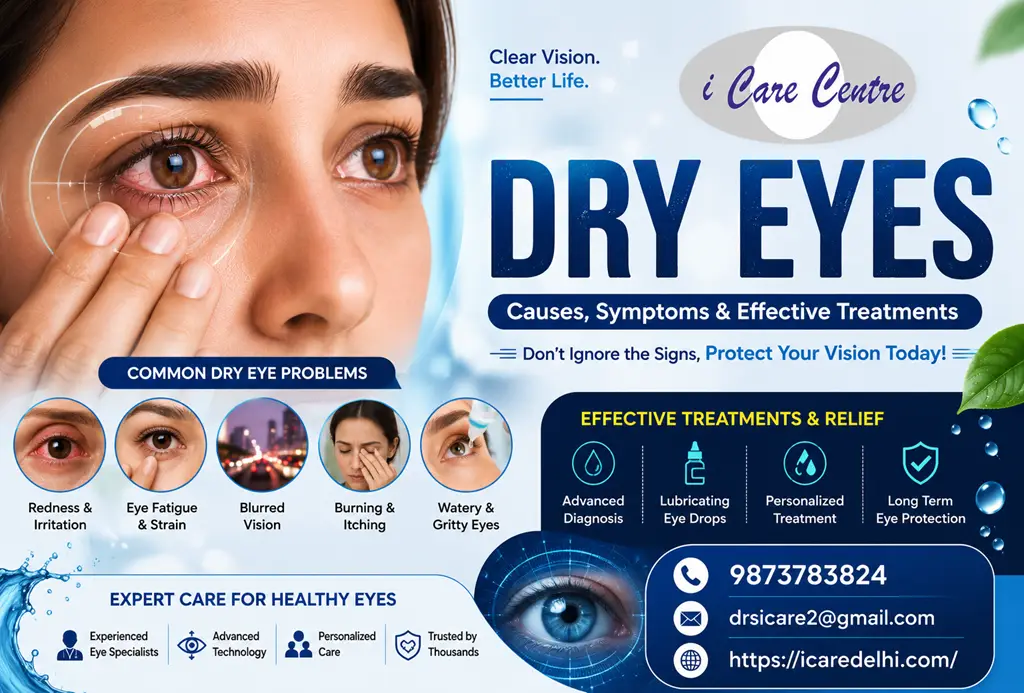
Our eyes need a healthy layer of tears to stay comfortable, clear, and protected. Tears are not just produced when we cry—they constantly lubricate the eyes, remove dust and debris, and help maintain clear vision. When your eyes do not produce enough tears or the tears evaporate too quickly, it can lead to Dry Eye Disease (DED).
Dry eyes have become increasingly common due to prolonged screen time, air-conditioned environments, pollution, aging, and certain medical conditions. Although dry eyes may seem like a minor problem, untreated dry eye can affect your daily life, work productivity, and long-term eye health.
In this guide, you’ll learn what is dry eye, its causes, common dry eye symptoms, effective treatment options, and practical tips on how to avoid dry eyes.
Also Read: Common Eye Problems and How to Prevent Them
What Is Dry Eye?
Dry eye is a condition where your eyes cannot maintain a healthy tear film. Tears consist of three important layers—oil, water, and mucus—that work together to keep the eye surface smooth and comfortable.
When any of these layers becomes imbalanced, your eyes may become dry, irritated, and inflamed.
Dry eye may occur because:
- Your eyes do not produce enough tears.
- Tears evaporate too quickly.
- The quality of tears is poor.
This condition can affect people of all ages but is more common among older adults, office workers, contact lens users, and individuals who spend several hours using digital devices.
Why Are Tears Important?
Healthy tears help:
- Keep the eye surface lubricated
- Wash away dust and foreign particles
- Reduce the risk of infection
- Improve clear vision
- Protect the cornea
Without sufficient tears, everyday activities such as reading, driving, or working on a computer may become uncomfortable.
Dry Eye Symptoms
Recognizing dry eye symptoms early can help prevent complications.
Common symptoms include:
- Burning sensation in the eyes
- Stinging or irritation
- Redness
- Feeling like something is stuck inside the eye
- Blurred vision that improves after blinking
- Watery eyes (a reflex response)
- Eye fatigue
- Sensitivity to light
- Difficulty wearing contact lenses
- Stringy mucus around the eyes
- Discomfort while reading or using digital devices
Symptoms often become worse in:
- Air-conditioned rooms
- Windy weather
- Air travel
- Long working hours on computers
- Hot and dry climates
Common Causes of Dry Eyes
Understanding the causes helps in choosing the right treatment.
1. Excessive Screen Time
Blinking reduces significantly while using computers, laptops, or smartphones. Reduced blinking causes tears to evaporate faster.
2. Aging
Natural tear production decreases with age, making dry eyes more common after 50 years.
3. Environmental Factors
Exposure to:
- Dust
- Smoke
- Pollution
- Air conditioning
- Ceiling fans
- Dry weather
can increase tear evaporation.
4. Hormonal Changes
Women may experience dry eyes during pregnancy, menopause, or because of hormonal changes.
5. Contact Lens Use
Long-term use of contact lenses may affect tear stability and increase dryness.
6. Certain Medical Conditions
Dry eye may be associated with:
- Diabetes
- Rheumatoid arthritis
- Thyroid disorders
- Sjögren’s syndrome
- Vitamin A deficiency
7. Medications
Some medicines reduce tear production, including:
- Antihistamines
- Antidepressants
- Blood pressure medications
- Acne medications
- Some sleeping pills
8. Previous Eye Surgery
Some people experience temporary dry eyes after LASIK or cataract surgery.
Who Is at Higher Risk?
You may be at greater risk if you:
- Are over 50 years old
- Spend more than 6 hours daily on screens
- Wear contact lenses regularly
- Have diabetes
- Work in air-conditioned offices
- Smoke
- Wear eye makeup near tear glands
- Take medications affecting tear production
How Is Dry Eye Diagnosed?
An eye specialist performs a detailed eye examination that may include:
- Vision assessment
- Tear production tests
- Tear quality evaluation
- Examination of the cornea
- Slit-lamp examination
- Tear break-up time (TBUT)
- Meibomian gland assessment
Early diagnosis helps prevent long-term damage to the eye surface.
Effective Treatments for Dry Eyes
Treatment depends on the severity and underlying cause.
1. Artificial Tears
Lubricating eye drops are often the first line of treatment. They help restore moisture and reduce irritation.
2. Prescription Eye Drops
For moderate to severe dry eye, your ophthalmologist may prescribe anti-inflammatory medications that improve tear production and reduce inflammation.
3. Warm Compresses
Applying a warm compress helps unblock oil glands in the eyelids, improving tear quality.
4. Eyelid Hygiene
Cleaning the eyelids regularly helps manage blepharitis and meibomian gland dysfunction, common contributors to dry eye.
5. Omega-3 Rich Diet
Including foods such as:
- Salmon
- Flaxseeds
- Walnuts
- Chia seeds
may support healthy tear production.
6. Punctal Plugs
Tiny plugs placed in the tear drainage ducts help keep tears on the eye surface longer, providing lasting relief in selected patients.
7. Lifestyle Changes
Simple adjustments can significantly improve symptoms.
How to Avoid Dry Eyes
If you’re wondering how to avoid dry eyes, these practical tips can help:
Follow the 20-20-20 Rule
Every 20 minutes, look at something 20 feet away for 20 seconds to reduce digital eye strain.
Blink More Frequently
Consciously blinking helps spread tears evenly across the eye surface.
Stay Hydrated
Drink enough water throughout the day to support overall hydration, including tear production.
Use a Humidifier
Adding moisture to indoor air can reduce tear evaporation, especially in air-conditioned environments.
Wear Protective Eyewear
Wraparound sunglasses help shield your eyes from wind, dust, and dry air outdoors.
Limit Direct Airflow
Avoid direct exposure to fans, air conditioners, or heaters blowing toward your face.
Eat Eye-Healthy Foods
A balanced diet rich in vitamins A, C, E, and Omega-3 fatty acids supports healthy eyes.
Take Screen Breaks
Reduce continuous screen exposure whenever possible and maintain an appropriate viewing distance.
Can Dry Eyes Lead to Complications?
Yes. Untreated dry eye may result in:
- Chronic eye inflammation
- Corneal scratches
- Eye infections
- Reduced vision quality
- Difficulty performing daily activities
- Corneal ulcers in severe cases
Early treatment greatly reduces these risks.
When Should You See an Eye Specialist?
Consult an ophthalmologist if you experience:
- Persistent eye redness
- Blurred vision
- Eye pain
- Sensitivity to light
- Symptoms lasting more than a few days
- Frequent need for lubricating eye drops
- Difficulty performing daily tasks because of eye discomfort
Prompt evaluation helps identify the underlying cause and ensures appropriate treatment.
Why Early Treatment Matters
Dry eye is often a chronic condition, but with timely diagnosis and personalized care, most people can achieve significant symptom relief and maintain healthy vision. Delaying treatment may lead to worsening discomfort and damage to the surface of the eye.
Regular eye examinations are especially important for people who spend long hours on digital devices, wear contact lenses, or have diabetes or other chronic health conditions.
Conclusion
Dry eye disease is one of the most common eye conditions today, affecting people of all ages. Understanding what is dry eye, recognizing dry eye symptoms, and learning how to avoid dry eyes can help protect your vision and improve your quality of life.
Simple lifestyle changes, regular eye care, and early consultation with an experienced ophthalmologist can make a significant difference. If you experience persistent dryness, irritation, or blurred vision, don’t ignore the symptoms. A comprehensive eye examination can identify the cause and help you receive the most effective treatment tailored to your needs.
If you’re looking for expert diagnosis and personalized treatment for dry eyes, consult the experienced ophthalmologists at i Care Centre Delhi for comprehensive eye care and long-term vision health.
Frequently Asked Questions
1. What is dry eye?
Dry eye is a condition in which the eyes do not produce enough quality tears or tears evaporate too quickly, causing irritation and discomfort.
2. What are the most common dry eye symptoms?
Common symptoms include burning, redness, blurred vision, eye fatigue, watering, sensitivity to light, and a gritty sensation.
3. How can I avoid dry eyes?
Take regular screen breaks, blink frequently, stay hydrated, wear protective eyewear, maintain eyelid hygiene, and use a humidifier if needed.
4. Can dry eyes affect vision?
Yes. Severe or untreated dry eye can cause blurred vision and may damage the corneal surface over time.
5. Is dry eye permanent?
Many people successfully manage dry eye with lifestyle changes, lubricating eye drops, and appropriate medical treatment. The condition can often be controlled, even if it is chronic.