
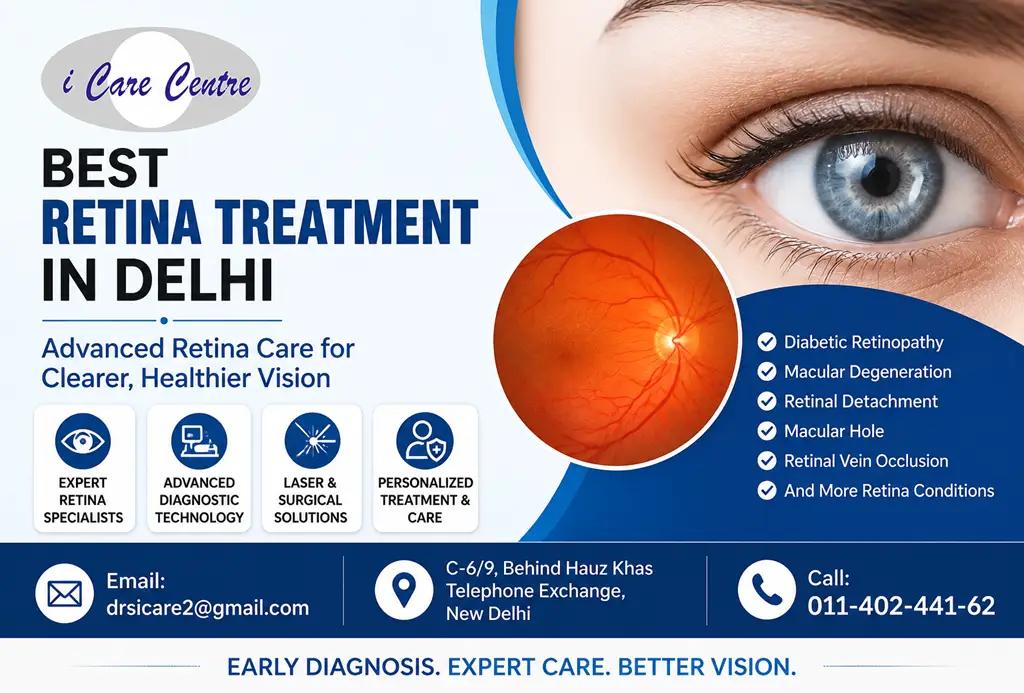
Your eyesight is one of your most valuable senses, and the retina plays a crucial role in helping you see the world clearly. If you are looking for the best retina treatment in Delhi, early diagnosis and expert care are essential to protect your vision. Located at the back of the eye, the retina captures light and sends visual signals to the brain, enabling clear and detailed vision. Any damage to this delicate layer can lead to blurred vision, vision distortion, or even permanent vision loss if left untreated.
Retinal diseases often develop silently, with symptoms appearing only after significant damage has occurred. Fortunately, advances in ophthalmology have made it possible to diagnose and treat most retinal conditions effectively when detected early. Whether you are experiencing vision changes or have risk factors such as diabetes or high blood pressure, consulting an experienced retina specialist in Delhi can help preserve your eyesight. At i Care Centre Delhi, we provide advanced retina treatment in Delhi using modern diagnostic technology and personalized treatment plans to help patients maintain healthy vision and improve their quality of life.
Also Read: Dry Eyes: Causes, Symptoms & Effective Treatments Guide
What Is the Retina?
The retina is a thin, light-sensitive layer of tissue located at the back of the eye. It works like the camera sensor of the eye, capturing light and converting it into electrical signals that travel through the optic nerve to the brain. These signals allow us to recognize colors, shapes, faces, and movement.
A healthy retina is essential for clear vision. Any disease, injury, or degeneration affecting the retina can interfere with this process and may result in partial or complete vision loss if not treated promptly.
Common Retina Diseases
Several conditions can affect the retina. Some develop gradually, while others require immediate medical attention.
1. Diabetic Retinopathy
Diabetic retinopathy is one of the most common retinal diseases among people with diabetes. High blood sugar levels damage the tiny blood vessels in the retina, causing them to leak fluid or bleed. In advanced stages, abnormal blood vessels may develop, leading to severe vision problems.
Symptoms
- Blurred vision
- Floaters
- Dark spots
- Difficulty reading
- Poor night vision
- Vision loss in advanced stages
Regular eye examinations are essential for diabetic patients to detect retinal damage before symptoms appear.
2. Age-Related Macular Degeneration (AMD)
Macular degeneration affects the macula, the central part of the retina responsible for sharp and detailed vision. It is more common in people over the age of 50.
Symptoms
- Blurred central vision
- Difficulty recognizing faces
- Straight lines appearing curved
- Reduced color perception
- Trouble reading small print
Early diagnosis and treatment can help slow disease progression and preserve useful vision.
3. Retinal Detachment
Retinal detachment occurs when the retina separates from the back wall of the eye. This condition is considered a medical emergency and requires immediate treatment.
Warning Signs
- Sudden flashes of light
- Increase in floaters
- A shadow or curtain moving across vision
- Sudden loss of peripheral vision
- Rapid decrease in eyesight
Prompt surgical treatment significantly improves the chances of saving vision.
4. Macular Hole
A macular hole is a small opening that develops in the macula, affecting central vision.
Symptoms
- Distorted vision
- Blurred central vision
- Difficulty reading
- Straight lines appearing bent
- Trouble recognizing faces
Modern surgical techniques provide excellent outcomes for many patients.
5. Retinal Vein Occlusion
This condition occurs when one of the veins carrying blood away from the retina becomes blocked. The blockage can cause swelling, bleeding, and sudden vision loss.
Risk Factors
- Diabetes
- High blood pressure
- High cholesterol
- Glaucoma
- Smoking
Early treatment helps reduce complications and preserve vision.
Symptoms That Should Never Be Ignored
Retinal diseases often progress without pain, making it important to recognize warning signs early.
Consult an eye specialist immediately if you experience:
- Sudden blurred vision
- Flashes of light
- Floaters
- Distorted vision
- Dark spots
- Loss of side vision
- A curtain-like shadow over your vision
- Sudden vision loss
Ignoring these symptoms can increase the risk of permanent retinal damage.
Advanced Retina Diagnosis
Accurate diagnosis is the first step toward successful treatment. At i Care Centre Delhi, advanced diagnostic technology helps specialists detect retinal diseases in their earliest stages.
Common diagnostic tests include:
- Optical Coherence Tomography (OCT)
- Digital Fundus Photography
- Fluorescein Angiography
- OCT Angiography
- Retinal Imaging
- Dilated Retina Examination
- B-Scan Ultrasound (when required)
These tests provide detailed images of the retina, allowing specialists to identify even the smallest abnormalities.
Advanced Retina Treatment Options
Treatment depends on the type and severity of the retinal condition.
Intravitreal Injections
These specialized injections are used to treat conditions such as diabetic macular edema, wet macular degeneration, and retinal vein occlusion. The medication helps reduce swelling and prevents further vision loss.
Laser Retina Treatment
Laser therapy seals leaking blood vessels, repairs retinal tears, and slows the progression of diabetic retinopathy.
Benefits include:
- Minimally invasive
- Quick recovery
- Effective disease control
- Reduced risk of further complications
Vitrectomy Surgery
Vitrectomy is an advanced microsurgical procedure used to remove the vitreous gel inside the eye.
It is commonly recommended for:
- Retinal detachment
- Vitreous hemorrhage
- Macular hole
- Epiretinal membrane
Modern vitrectomy techniques involve tiny incisions and faster healing.
Retinal Detachment Surgery
Depending on the condition, retinal detachment may be treated using:
- Pneumatic Retinopexy
- Scleral Buckling
- Pars Plana Vitrectomy
Early intervention greatly increases the likelihood of restoring vision.
Who Should Have Regular Retina Check-Ups?
Regular retina examinations are especially important for individuals who:
- Have diabetes
- Have high blood pressure
- Are above 50 years of age
- Have high myopia (high minus power)
- Have a family history of retinal disease
- Have suffered an eye injury
- Have undergone previous eye surgery
Routine screening helps detect retinal problems before they begin affecting vision.
Tips to Keep Your Retina Healthy
Healthy lifestyle choices can significantly reduce the risk of retinal diseases.
Follow these simple habits:
- Schedule regular comprehensive eye examinations.
- Keep blood sugar levels under control.
- Manage blood pressure and cholesterol.
- Eat foods rich in antioxidants and Omega-3 fatty acids.
- Wear UV-protective sunglasses outdoors.
- Avoid smoking and excessive alcohol consumption.
- Exercise regularly.
- Take breaks during prolonged screen use.
- Seek immediate medical attention if you notice sudden vision changes.
Why Choose i Care Centre Delhi for Retina Treatment?
Choosing the right eye care provider is essential for protecting your vision. At i Care Centre Delhi, we combine advanced technology with compassionate patient care to deliver comprehensive retina treatment.
We offer:
- Experienced retina specialists
- Advanced retinal imaging and diagnostic equipment
- Personalized treatment plans
- Modern laser and surgical procedures
- Comprehensive diabetic eye care
- Patient-focused consultation and follow-up care
- High standards of safety and clinical excellence
Our goal is to diagnose retinal conditions early, provide effective treatment, and help every patient enjoy clearer and healthier vision.
Frequently Asked Questions
Is retina treatment painful?
Most retina treatments are performed under local anesthesia and are generally well tolerated with minimal discomfort.
Can retinal diseases be cured?
While some retinal conditions cannot be completely cured, early diagnosis and timely treatment can slow progression, preserve vision, and improve quality of life.
How often should diabetic patients have a retina examination?
People with diabetes should have a comprehensive dilated eye examination at least once a year or more frequently if recommended by their eye specialist.
Is retinal detachment an emergency?
Yes. Retinal detachment requires immediate medical attention. Early treatment offers the best chance of restoring and preserving vision.
How long does recovery take after retina surgery?
Recovery varies depending on the type of surgery and the patient’s overall eye health. Your ophthalmologist will provide detailed post-operative care instructions.
Conclusion
Healthy vision begins with a healthy retina. Since many retinal diseases develop without noticeable symptoms in the early stages, regular eye examinations are the best way to detect problems before they become serious. Whether you are living with diabetes, experiencing sudden changes in vision, or simply want to protect your eyesight, timely evaluation by an experienced retina specialist is essential.
At i Care Centre Delhi, we are dedicated to providing advanced retina diagnosis, modern treatment options, and personalized care for every patient. Our experienced ophthalmologists use the latest technology to diagnose retinal conditions accurately and recommend the most effective treatment plan based on your individual needs. If you notice blurred vision, floaters, flashes of light, or any other changes in your eyesight, don’t wait.
Book your eye examination at i Care Centre Delhi today and take the first step toward protecting your vision for a brighter and healthier future.